About 3 Rolls W11 Plate Rolling Mechanical Plate Bending Machine
{"","
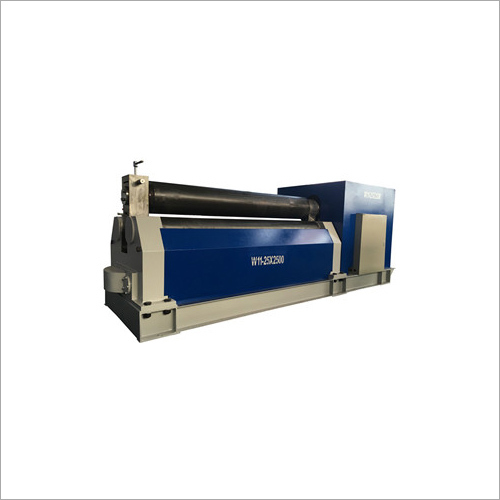
3 Rolls W11 Plate Rolling Mechanical Plate Bending Machine is 3-roller non-symmetric rolling equipment utilized in the procedure of cold functioning in which the sheets within 12mm thickness can be bent into varied diameter cylindrical tubes. It is extensively utilized in chemical industry, boiler, construction, mining, shipbuilding and other machinery industries. Up roller given in the machine does the vertical lifting task in the central of the two another down rollers. Besides, 3 Rolls W11 Plate Rolling Mechanical Plate Bending Machine comes in several models and technical specifications.
"}
Precision Engineering for Industrial BendingThanks to premium-grade alloy steel rolls that are precision ground and hardened, this plate bending machine ensures accurate shaping and finish in every use. The mechanical screw-based roll adjustment system allows fine-tuning for diverse project requirements, making it reliable for producing consistent arcs, cylinders, and cones across various thicknesses and materials.
Flexible Control and Safety FeaturesUser-friendly operation is made accessible through compact mechanical controls, offering a choice between manual handwheel or electric systems. To enhance operator safety, an integrated emergency stop switch instantly halts the machine if needed. The operator console enables intuitive handling, while manual grease points ensure easy routine maintenance.
Designed for Heavy-Duty Industrial WorkEngineered for continuous operation, this mechanical plate bending machine delivers strong performance with a bending strength of up to 240 MPa and a production capacity suited for industrial-scale fabrication. Adjustable bending angles and speeds allow adaptation to varied job specifications, making it a preferred choice for manufacturers, suppliers, and traders.
FAQ's of 3 Rolls W11 Plate Rolling Mechanical Plate Bending Machine:
Q: How does the 3 Rolls W11 Plate Rolling Machine operate?
A: This plate bending machine operates using mechanical power, featuring a pyramid-type rolling method with three alloy steel rolls. The top and bottom rolls are adjusted via a mechanical screw system, allowing operators to form steel plates into cylinders, cones, or arcs by manually or electrically controlling the process.
Q: What types of metal sheets or plates can be processed with this machine?
A: The machine is designed to handle steel plates and metal sheets, with a capacity of up to 6mm in thickness and 2000mm in width, depending on the model. It is suitable for both ferrous and select non-ferrous materials, making it versatile for various industrial applications.
Q: When should I use manual versus electric control for the plate bending process?
A: Manual handwheel control is best suited for smaller-scale operations or precision adjustments, while electric control offers increased efficiency and ease for larger, continuous production jobs. The choice depends on your workflow and project requirements.
Q: Where is this machine most commonly used?
A: This plate bending machine is commonly used in manufacturing plants, metal fabrication workshops, and industrial construction projects. It is ideal for environments where frequent, repeatable bending of metal sheets or plates is required.
Q: What is the process for adjusting the rolls for different workpieces?
A: Roll adjustment is performed using a mechanical screw type system. Operators adjust the position of the rolls according to the desired bend radius and plate thickness, ensuring proper forming of arcs, cylinders, or cones as needed.
Q: How do the safety features benefit operators during use?
A: The integrated emergency stop switch enhances operator safety by allowing immediate shutdown of the machine in case of unexpected events. Together with well-designed mechanical controls, these features minimize risks and provide a secure working environment.
Q: What are the key benefits of using this plate bending machine for metalworking projects?
A: This machine offers robust construction, precise bending capability, and flexible control options. Its ability to handle continuous, multi-piece operations and adaptability to different bending requirements help increase productivity while ensuring reliable, high-quality outputs.

 Send Inquiry



 Send Inquiry

 Send Inquiry